Impact on Bat Conservation and Community
By curbing deforestation, the energy saving cookstoves and fireless cookers protect the cave – forest ecosystem essential for diverse bat colonies including the endangered Hildegarde’s tomb bat. Additionally, the improved cookstoves and fireless cooker significantly reduce household air pollution, improving the health of women and children.
Women, youth and people living with disabilities were trained as cook-stove entrepreneurs, creating jobs and saving money on fuel.
The Tswaka Three Giant Sister Cave Community Based Organization with support from partner organizations like Angaza Vijiji and Bat Conservation International hopes to scale this enterprise proving that sustainable, community led solutions can create a balance between livelihoods and conservation.
Smart Energy Saving Training for a Green Future
The training programme focused on two key affordable low-cost technologies:
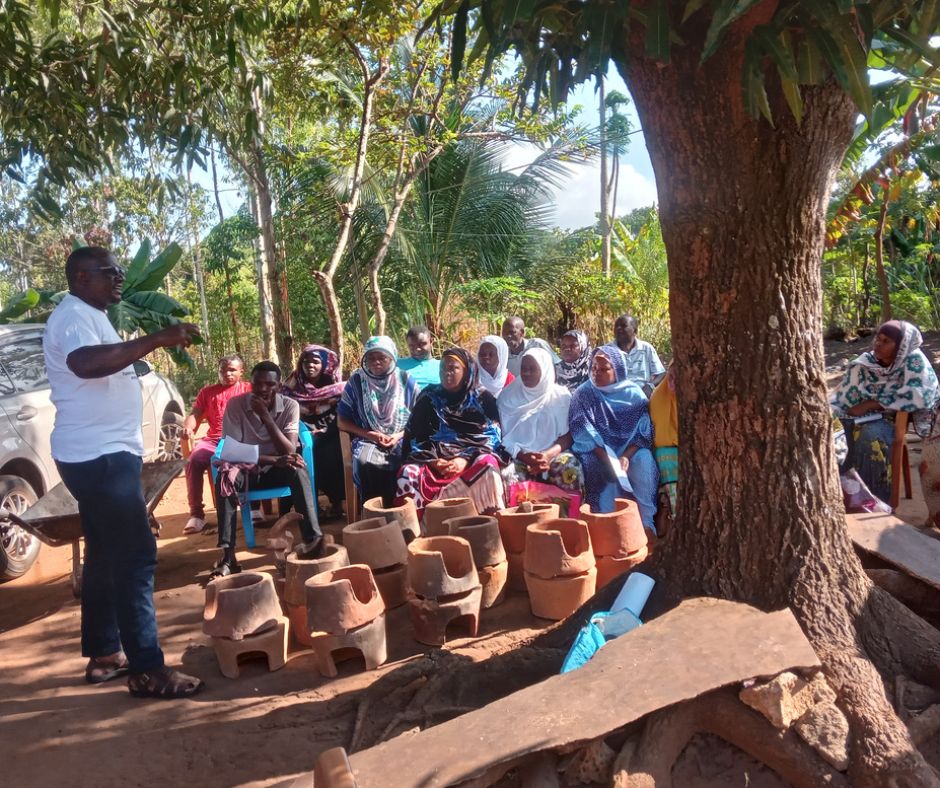
i)Improved cookstoves (ICS) – jiko kisasa: These locally made, insulated stoves utilize less firewood than traditional fires. By reducing the need for fuel, they directly decrease the pressure on local forest ecosystems.
ii) Fireless cookers: A green technology that acts as insulated basket to complete the cooking process without further fuel use. Normally, food is brought to boil on an improved cook-stove, then quickly transferred to the fire-less cooker, where the food continues to cook for minutes or hours depending on food type, using retained heat.
Training and entrepreneurship
The energy saving training sessions, held over 4 days focused not only on building the stoves but also on fostering a local business model. Participants were trained to:
a)Construct (theory), repair and install stoves.
b)Assemble fireless cookers using locally sourced materials
c)Market and sell the products and services within their communities and even nationwide, turning bat conservation into an income generating activity, and creating a sustainable local business enterprise
COOKING FOR CONSERVATION: EMPOWERING COMMUNITIES TO PROTECT BAT SPECIES AND THEIR HABITATS.
Tswaka community- in the heart of Fikirini area, Lunga Lunga Sub county in Kwale County, where lush cave – forest ecosystem provides crucial habitats for diverse bat species including the endangered Hildegarde’s Tomb Bat Taphozous hildegardeae) and essential ecological services, a new, quitter revolution is taking place. A revolution that doesn’t need expensive and complex machinery or rather innovation, but rather, a simple, transformative approaches to a basic daily necessity: Cooking and not just cooking but utilizing energy saving approaches.
Between September 2024 and October 2025, .Angaza Vijiji in collaboration with Bat Conservation International and Lush Handmade Cosmetics launched an ambitious initiative “ Energy saving cookstoves and fireless cookers training” and trained 20 community representatives from the Tswaka Three Giant Sister Caves Community Based Organization in the production (theory), installation (experiential) and use of homemade energy saving cookstoves and fireless cookers (both theory and practical), directly linking Tswaka Community livelihoods with conservation of existing local fragmented forests and cave ecosystem which are bat habitats. We had 25 improved cookstoves installed in 25 households.
When cooking threatens biodiversity
Previously at the inception of the bat conservation project, many households in the Tswaka Community greatly relied on traditional “three-stone” open fires, which are inefficient, unsustainable, requiring large amounts of firewood, driving rapid deforestation, accelerating climate change, and causing severe health issues for women and children due to smoke inhalation. This environmental degradation also has a hidden victim “ the Hildegarde’s Tomb Bat and sympatric species”. As the already fragmented cave – forest ecosystem was under attack due to forests being cleared for fuel, the natural, dark and roosting sites for bats were being destroyed affecting bat populations and their status on the IUCN
RedList – including the endangered Hildegarde’s tomb bat. This loss of habitat threatens the species population, which plays a vital role in pest control among other ecological and economic benefits. Furthermore, the arduous, daily, and time-consuming labor of gathering firewood falls largely on women and children who are also greatly affected by smoke pollution.